Connecting Homeowners to Sustainable Solutions
Home Energy Audits in Boulder, CO
-
Professional energy audits identify hidden energy waste.
-
Audits reveal comfort issues, air leaks, and insulation problems.
-
Homeowners receive practical recommendations for improvement.
-
Results can lower utility bills and improve comfort.
-
An energy audit provides a roadmap for future upgrades such as heat pumps and solar.
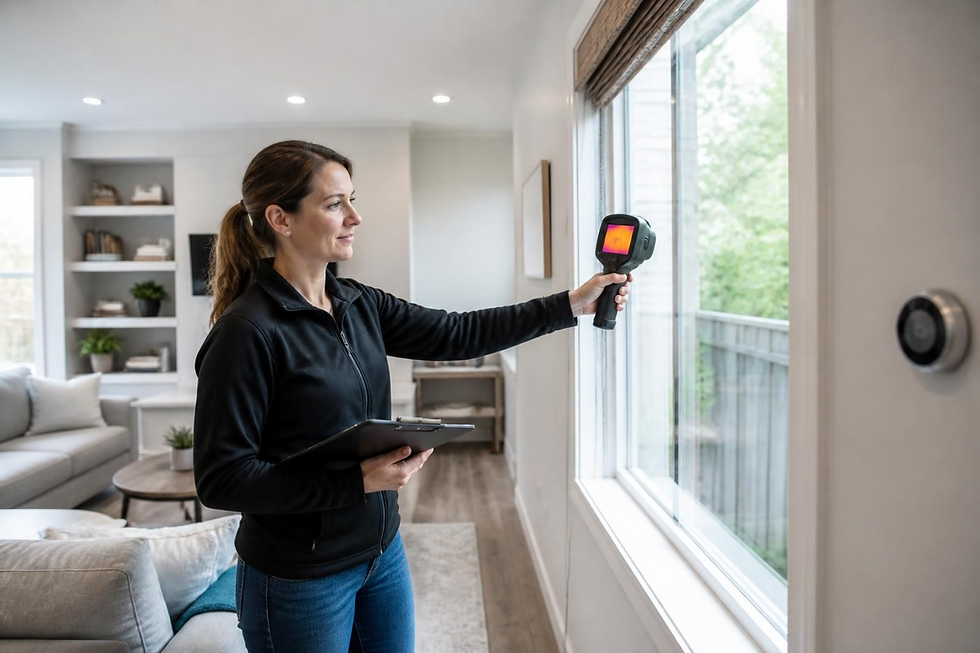
What Is a Home Energy Audit?
A home energy audit is a comprehensive evaluation of your home's energy performance.
-
Examines how all home systems work together.
-
Evaluates insulation, air sealing, HVAC systems, ventilation, windows, and energy use.
-
Identifies:
-
Air leakage
-
Poor insulation
-
High energy consumption
-
Hot and cold rooms
-
Indoor air quality concerns
-
Opportunities for efficiency upgrades
-
-
Helps homeowners make informed decisions about future improvements
Benefits of a Home Energy Audit
A professional home energy audit provides valuable insight into how your home performs and where improvements can have the greatest impact. Rather than guessing which upgrades will help, you'll receive data-driven recommendations that allow you to invest confidently in your home.
Many Boulder homeowners are surprised to learn how much energy is lost through air leaks, inadequate insulation, and aging mechanical systems. An energy audit identifies these issues and outlines practical solutions.
Benefits Include
✅ Lower monthly utility bills
✅ Improved indoor comfort year-round
✅ Fewer hot and cold spots throughout the home
✅ Better indoor air quality
✅ Reduced energy waste
✅ Increased home efficiency
✅ Support for heat pump and solar planning
✅ Greater long-term home value
By understanding your home's energy performance, you can prioritize improvements that deliver the most meaningful results.
How Our Home Energy Audit Process Works
Most homeowners know when something in their home isn't working as efficiently as it should.
High utility bills, uncomfortable rooms, drafts, uneven temperatures, and aging equipment are often symptoms of larger underlying issues. While many homeowners immediately begin researching replacement equipment or major upgrades, the most effective improvements typically begin with understanding how the home is performing as a complete system.
That's why a home energy audit is often the first and most important step.
Rather than guessing which upgrades may provide the greatest benefit, an energy audit helps identify opportunities to improve efficiency, comfort, and overall home performance before additional investments are made
Step 1: Schedule Your Home Energy Audit
The process begins with a consultation and home assessment designed to better understand your property, energy concerns, and long-term goals.
Whether you're looking to lower utility costs, improve comfort, prepare for future upgrades, or simply gain a better understanding of your home's energy performance, the audit provides a starting point for making informed decisions.
Step 2: Assess Your Home's Energy Performance
During the assessment, key areas that affect energy efficiency, comfort, and overall home performance are reviewed.
This whole-home approach looks beyond individual components and focuses on how the home's systems work together. By examining the home as a complete system, it becomes easier to identify opportunities for meaningful improvements.
Step 3: Identify Opportunities for Improvement
Many common household issues are connected to energy performance.
Drafts, inconsistent room temperatures, rising utility bills, and other comfort concerns may be caused by several factors working together. The assessment helps identify opportunities where improvements may provide the greatest impact.
Step 4: Receive Your Personalized Recommendations
After the assessment, you'll receive recommendations designed to help prioritize potential improvements based on your home's unique needs and your goals.
Rather than focusing on a single solution, the recommendations provide a clearer understanding of where improvements can deliver the most value.
Step 5: Create a Roadmap for the Future
Every homeowner's priorities are different.
Some homeowners may prefer to address immediate concerns with simple improvements, while others may be planning larger efficiency projects over time.
Recommendations are often organized into easy-to-understand categories:
Good
Focus on practical improvements that may help improve efficiency and address immediate concerns.
Better
Combine targeted upgrades that can improve comfort, reduce energy waste, and enhance overall home performance.
Best
Create a long-term strategy designed to maximize efficiency, comfort, and the overall performance of the home.
The goal is not to rush into upgrades.
The goal is to understand where energy is being lost, identify opportunities for improvement, and create a roadmap that helps homeowners make confident decisions about their home.
A successful home performance project starts with understanding the problem before investing in the solution. By beginning with a home energy audit, Boulder and Front Range homeowners can take a more informed approach to improving comfort, reducing energy waste, and planning for future upgrades.